
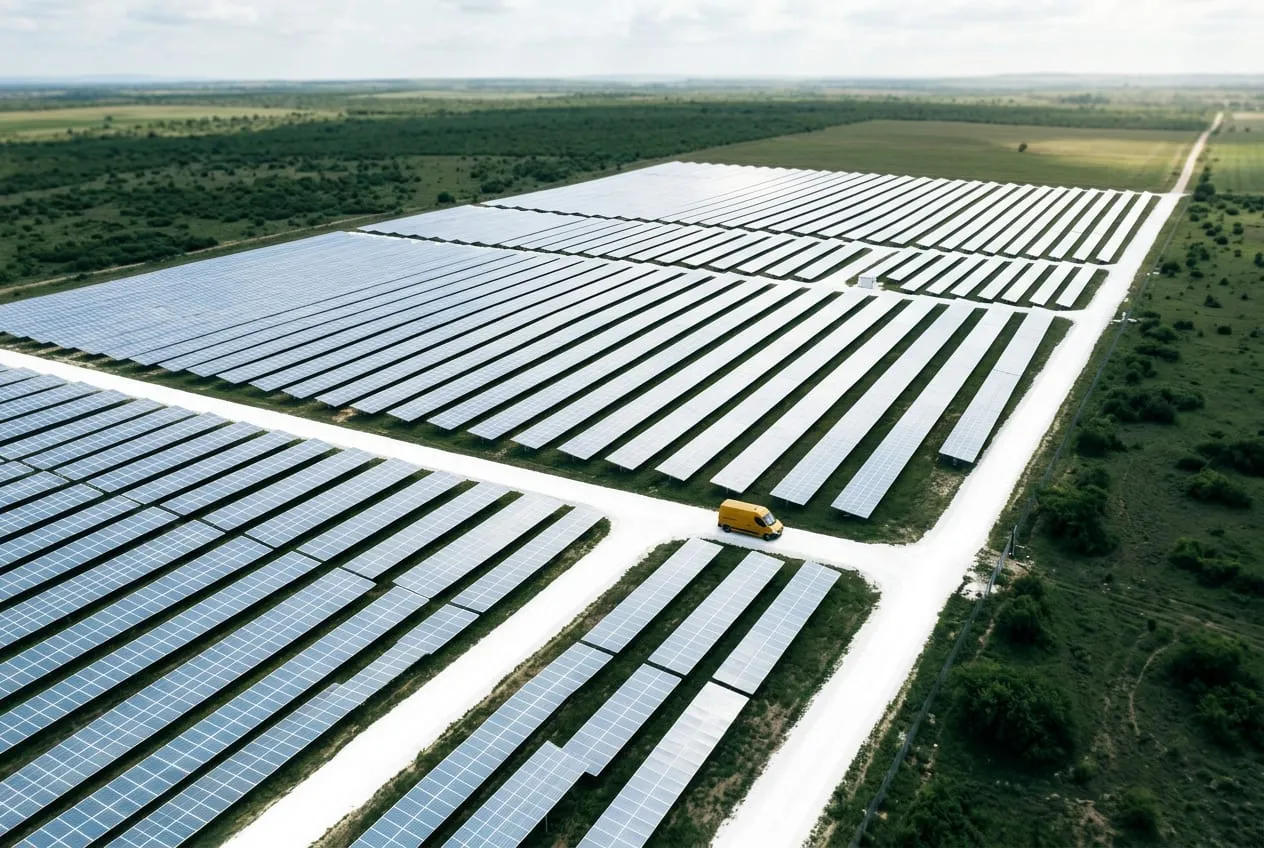
The Future of Renewable Energy
Generation was the easy part. The next decade of the energy transition will be decided by operations, workforce, and data.
The conversation about renewable energy has spent two decades on generation: how much capacity, at what cost, how quickly. That question is largely settled. The harder one is operational, and it is where the next decade will actually be decided.
Distributed generation changes the shape of the problem. A single large thermal plant is one asset with one maintenance regime and one crew. A comparable renewable portfolio might be hundreds of assets across a region, each with different failure modes, different access constraints, and weather-dependent output.
Three operational pressures
Asset volume outpaces workforce growth. The number of assets requiring inspection is rising considerably faster than the pool of qualified technicians. That gap cannot be closed by hiring alone, which makes scheduling and routing a commercial lever rather than an administrative detail.
Forecasting moves from planning to operations. When output depends on weather, forecast quality stops being a quarterly planning input and becomes a live operational feed. Systems that assumed stable generation need rework.
Compliance evidence gets heavier. More assets, more jurisdictions, more reporting. Organisations still assembling compliance evidence manually find the effort scales linearly with the portfolio — which is to say, unsustainably.
Where the leverage is
The organisations handling this well have generally invested in the same unglamorous places:
- One view of the asset base, including the assets acquired through portfolio purchases that arrived with their own spreadsheets.
- Scheduling that accounts for reality — weather windows, travel time, certifications, parts availability — rather than treating a work order as an abstract unit.
- Field data captured once, at the source, by technicians on a device that works when connectivity does not.
None of this is novel. It is, however, where the margin is.
The uncomfortable part
Much of the operational tooling in this sector was built for a generation profile that no longer exists. Extending it is usually cheaper this year and considerably more expensive across five.
That is a difficult case to make in a budget cycle. It is also, in our experience, the decision that separates the portfolios that scale from the ones that plateau.
Generation was the easy part. Operations decide the next decade.
Workforce, data and field execution are what separate the portfolios that scale from the ones that stall.
Talk to our teamBook a demoSee our energy and utilities solutions
Bring us the problem behind the project.
If any of this maps onto something you are working through, a short conversation is usually enough to tell whether we can help.